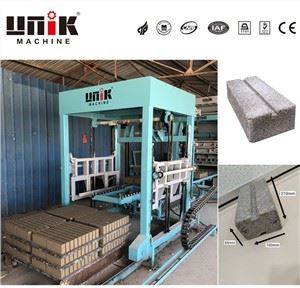
UNIK Forming Machine: What Makes the Coordination Between Vibration and Hydraulics Different?
When selecting a block forming machine, the easiest things for customers to compare are the forming cycle, output, and power. But behind these visible numbers, what truly determines the long-term operating cost and product consistency of the equipment is the precision of coordination between the vibration system and the hydraulic system. UNIK Machinery's block forming machines treat the synergy of these two systems as the core of the entire machine design, rather than as independently stacked components.
1. Vibration System: Siemens Motors and Stable Exciting Force
The vibration system of UNIK's block forming machine is driven by Siemens motors, with a vibration frequency range of 3,800–4,500 r/min, an exciting force covering 50–70 kN, and a forming cycle of 15–20 seconds. This parameter combination ensures block density while keeping the forming rhythm in an efficient range. The vibrator adopts an oil-immersed lubrication design, extending the service life of bearings and gears under continuous high-frequency vibration and reducing unplanned downtime caused by vibrator failure.
2. Hydraulic System: From "Can Move" to "Moves Precisely"
The hydraulic system of UNIK's forming machine integrates servo-hydraulic control technology with CML hydraulic valves (a Taiwan brand), achieving precise flow control of spreading, compaction, and demolding actions. The working pressure and action speed of the hydraulic system can be matched and adjusted according to different product recipes and molds, rather than operating at a fixed maximum output. This on-demand output control method compresses energy waste in the hydraulic system to a lower level while ensuring forming precision. Compared with traditional on-off hydraulic circuits, the action smoothness brought by proportional/servo control also directly reduces the impact load on cylinders and seals.
3. Coordination Logic: What Happens in 15–20 Seconds
Within a 15–20 second forming cycle, the action timing of the vibration system and the hydraulic system must mesh precisely: after the spreading cart is in position, vibration starts while the press head descends and applies pressure; vibration stops after reaching the set density, and the press head continues to complete final compaction; then the demolding action starts, and the pallet receives the formed blocks. Any timing offset in any link-vibration stopping early, delayed pressing, mismatched demolding speed-will manifest as block height deviation or density fluctuation. UNIK's PLC control system manages the action sequence of vibration and hydraulics as a unified process curve, rather than setting their time parameters separately.
4. Actual Performance in Global Projects
UNIK's forming machines have been implemented along with complete line projects in many countries and regions worldwide. Under standard configuration, the equipment can produce hollow blocks, solid bricks, paving bricks, and other products, with the forming cycle stable in the 15–20 second range. For factories that frequently switch product combinations, the recipe-based management capability of vibration and hydraulic parameters directly relates to the qualification rate of the first mold after changeover.
Welcome to contact UNIK Machinery to obtain a vibration-hydraulic configuration evaluation of the forming machine tailored to your product plan and capacity targets.