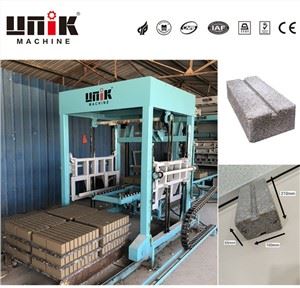
Using Construction Waste to Make Bricks: Why the Mix Design Cannot Save the Equipment
With tightening environmental policies and the scarcity of natural sand and gravel resources, using solid waste such as construction waste, tailings, and fly ash to produce recycled blocks has become a major industry trend. When entering this field, many investors tend to focus on finding a "guru" to formulate the solid waste mix, believing that as long as the mix design is right, the bricks can be made.
But the actual situation after production starts is often this: the mix design is fine, and the bricks are barely formed, but the equipment is "maladapted" – the mixer frequently jams, the forming machine molds wear out extremely fast, and the belt conveyor misaligns wildly. With solid waste brick making, it is often not the mix design that tests you, but the physical properties of the solid waste that test your equipment.
1. Water Absorption and Moisture Content: The "Invisible Killer" of the Batching System
The moisture content of natural sand and gravel is relatively stable, while recycled aggregate from construction waste has extremely high water absorption and huge fluctuations. In the same pile, the surface layer may be soaked by rain while the bottom layer is dry. When these materials enter the batching station, traditional weighing systems simply cannot capture such drastic changes in real time.
More critically, recycled aggregate often contains large amounts of micro-fines and mud clumps, which are highly prone to arching and blocking in the silo. If the batching station is not equipped with high-frequency arch-breaking devices and anti-sticking coated hoppers, the discharge will be intermittent, causing severe imbalance in the mix ratio. At this point, no matter how precisely the mix design is written, the weight of material entering the mixer is wrong.
2. Abrasiveness and Impurities: The "Extreme Test" for Forming Molds
Construction waste often contains unremoved crushed glass, small stones, and even metal fragments, and the particles of recycled aggregate have extremely sharp edges. The abrasiveness of this material on forming machine molds is several times that of natural sand and gravel.
Ordinary mold steel may show severe edge wear after only tens of thousands of cycles when pressing solid waste bricks, causing brick dimensional drift. Therefore, solid waste brick making must rely on high-quality mold systems – such as molds made of high-strength alloy steel and subjected to deep carburizing heat treatment (surface hardness reaching HRC 58–62) – to ensure block dimensional accuracy while resisting the continuous cutting action of sharp aggregates.
3. Forced Mixing: Solid Waste Materials Require Stronger "Shear Force"
Because recycled aggregate has a rough surface, absorbs water slowly, and often carries clumped mud balls, ordinary mixing methods struggle to break them apart and wrap them uniformly with cement. If a gravity mixer is used, the mud balls cannot be broken up at all, ultimately forming "dead zones" inside the bricks and causing a significant drop in strength.
Solid waste brick making must use a twin-shaft forced mixer (such as the JS series). Utilizing the high-speed shear and convection of the mixing arms, it can not only break up mud balls but also allow high-water-absorption aggregates to fully absorb water and cement paste under strong kneading, thereby fundamentally improving the density and compressive strength of recycled bricks.
4. Solid Waste Brick Making Is a "Systematic Project"
Turning solid waste into treasure is by no means as simple as "switching to a cheaper raw material." It requires the production line to form a systemic synergy in precision anti-blocking batching, highly wear-resistant molds, and strong shear mixing. If the hardware configuration of the equipment cannot meet these demanding requirements, even the most perfect mix design will remain only in a laboratory report.